Would you like to switch to the accessible version of this site?

Go to accessible site Close modal window

Don't need the accessible version of this site?

Hide the accessibility button Close modal window
Accessibility View Close toolbar

Town and Country Animal Clinic

1241 South Houston Lake Road; Warner Robins, GA 31088

Call

(478) 953-7297

[email protected]

Open mobile navigation
  • Home
  • About Us
    • Our Doctors
    • Our Staff
    • Clinic Tour
  • Patient Center
    • Online Pharmacy
    • Forms
    • Payment Options
  • Services
  • Patient Portal
  • Veterinary Topics
  • Links
  • Contact Us
  • Employment
  • Home >
  • Articles >
  • Newsletter Library >
  • Cats >
  • Preventing Obesity in Cats

Preventing Obesity in Cats

  • Created in Newsletter Library, Cats

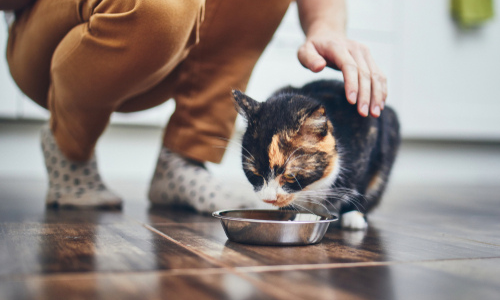
Cat eating from bowl

How to Help Your Cat Maintain a Healthy Weight

Overweight cats look cute in cartoons and memes, but feline obesity is no laughing matter. Excess weight strains your pet's heart and joints and increases the risk of diabetes, arthritis, urinary tract problems, cancer, and skin conditions.

Is Your Cat Overweight?

It's difficult to determine the ideal weight for your cat if you look at numbers alone. Although experts say cats should weigh between 7 to 12 pounds, some cats may be overweight or obese at 12 pounds, while others are sleek and slim.

A quick examination will help you evaluate your pet's weight. Run your hands over your pet's body. Can you feel the ribs or are they hidden under a thick layer of fat? The ribs are normally covered by a small amount of fat but can be felt easily if your cat isn't overweight. If you can't feel your pet's ribs, it may be time to make some changes to your pet's diet.

Take a look at your cat's waist from above while he or she is standing. You should see a slight indentation between the hips and back legs. A round appearance with no noticeable waist may mean that your cat is overweight or obese.

What You Can Do to Prevent Obesity

These steps can help your cat avoid the dangerous consequences of obesity:

  • Offer Food Appropriate for Your Cat's Age. Your pet's nutritional needs change throughout his or her lifetime. Growing kittens require more frequent feedings and need extra nutrients in their food. Continuing to feed cats food intended for kittens past one year of age can lead to weight gain. Food changes may also be needed as your pet ages. Less active, older cats may benefit from lower-calorie senior food. Your pet's veterinarian can help you find a type of cat food that meets all of your pet's nutritional requirements.
  • Pay Attention to Portion Sizes. Do you throw a handful of food in your cat's dish every time you notice it's empty? Overfeeding is a common cause of weight issues. In fact, your pet may only need one-third to one-half cup of food per day, depending on the food's calorie count. Take a look at the cat calorie calculator offered on the Pet Nutrition Alliance website to determine how many daily calories your cat really needs.
  • Limit Treats. Too many treats can also affect your pet's weight and may be a factor in obesity. Treats should account for no more than 10 percent of your pet's daily caloric intake, according to the Cummings Veterinary Medical Center at Tufts University.
  • Help Your Cat Stay Active. Cats need regular exercise to maintain their ideal weight and keep their hearts, muscles, and joints strong and healthy. Your cat may enjoy batting at the toy at the end of a kitty fishing rod, chasing a laser beam, or fetching a small toy. Interactive treat mazes offer physical and mental stimulation for your cat (as long as you pay attention to the calorie count of the treats), while battery-powered mice give your pet a fun workout. If you're handy, a homemade maze or climbing tower can keep your pet busy for hours.
  • Visit the Vet. It's easy to overlook a slight weight gain in your cat. Unfortunately, even an extra pound may increase your pet's risk of developing health problems. During annual wellness exams, your pet's veterinarian evaluates your cat's weight and body condition and can offer a few healthy eating tips if your favorite feline has started to gain weight.

Approximately 60 percent of cats are obese, according to the American Association for Pet Obesity Prevention. Could your cat be one of them? If you're concerned about your cat's weight, contact our office to schedule an appointment.

Sources:

Pet Nutrition Alliance: Calorie Calculator for Cats

Cummings Veterinary Medical Center at Tufts University: Top Five Nutrition Mistakes Pet Owners Make, 5/31/17

Association for Pet Obesity Prevention: 2018 Pet Obesity Survey Results

Cornell Feline Health Center: How Often Should You Feed Your Cat?

Catster: Do You Have an Obese Cat? Here’s How to Tell, 3/6/18

  • Pet Health
    • Chronic Conditions
    • Digestive and Oral Health
    • Diseases and Viruses
    • Pests and Parasites
    • Orthopedics
  • Today's Veterinarian
  • Choosing Your Pet
    • Finding Your Pet
    • Cats
    • Dogs
    • Exotics
      • Amphibians
      • Birds
      • Reptiles
        • Lizards
        • Turtles
    • Small Mammals
      • Ferrets
      • Rabbits
      • Domesticated Animals
        • Prairie Dogs
      • Pocket Pets
        • Chinchillas
        • Guinea Pigs
        • Hamsters
        • Hedgehogs
        • Rats
    • Livestock
      • Cows
      • Donkeys, Horses & Mules
      • Goats
      • Pigs
      • Poultry
      • Sheep
  • Living With Your Pet
    • Bringing Your Pet Home
    • Children and Pets
    • Providing Care
    • Travel
    • Saying Goodbye
  • Newsletter Library
    • Cats
    • Tips for Pet Owners
    • Behavior & Training
    • Fleas & Parasites
    • Keeping Pets Healthy
    • Recognizing Illness
    • Nutrition & Food
    • Pet Dangers
    • Seasonal Topics
    • Visiting the Vet
    • Equine
    • Newsletter Archive
      • Fun with Pets
      • Unbelievable Pets
  • Video Newsroom
    • Health Topics
    • Technology and Science
    • Other Interests
  • Newsletter Library
  • Client Survey
  • Pets4Kids

Contact Us

We look forward to hearing from you

Error!

    Featured Services

    • Contact Us

      Call or send us an email today! Our staff will respond as soon as possible.

      Contact
    • Online Pharmacy

      Visit our online pharmacy. Trust, convenience, and value!

      Learn More

    Office Hours

    Our Regular Schedule

    Monday:

    8:30 am-5:30 pm

    Tuesday:

    8:30 am-5:30 pm

    Wednesday:

    8:30 am-5:30 pm

    Thursday:

    8:30 am-5:30 pm

    Friday:

    8:30 am-5:30 pm

    Saturday:

    8:30 am-12:30 pm

    No Doctor's Hours on Saturdays

    Sunday:

    Closed

    Location

    We are centrally located between Feagin Mill Road and Hwy 96 on S. Houston Lake Road

    Testimonials

    Feedback from our clients

    • "Dr. Anderson has always gone above and beyond for the care of our family's pets for several years."
      John Doe / San Diego, CA
    • "Dr. Anderson has always gone above and beyond for the care of our family's pets for several years. We always feel questions are welcome, and Dr. Anderson spends whatever time is required to provide answers, whether we are in the office or just speaking on the telephone. Dr. Anderson always knows our pets’ special needs and personalities to provide them the best possible care."
      The Miller Family

    Featured Articles

    Helpful Reading

    • March Newsletter: How to Keep Your Cat Safe When Outdoors

      Wondering how your cat can safely spend time outdoors? ...

      Read More
    • March Newsletter: How to Choose Safe Blankets for Pets

      Do you know how to pick a safe blanket for your pet? ...

      Read More
    • February Newsletter: How to Reduce Dental Anxiety in Pets

      Does your pet hate toothbrushing? These tips could reduce dental anxiety. ...

      Read More

    Newsletter Sign Up

    Error!

      • Copyright © 2026 MH Sub I, LLC dba iMatrix.
      • Admin Log In
      • Site Map