Thanksgiving Day Safety Tips for Your Pet
Thanksgiving Day may be one of your favorite holidays, but Turkey Day can be dangerous for your pets. Following a few of these tips will help you ensure that your furry friends don't suffer a Thanksgiving emergency.
Limit Special Treats
It's best to stick to your pet's usual diet on Thanksgiving. Although a tiny taste of cooked turkey probably won't bother your pet, eating some traditional Thanksgiving foods may make your pet sick. Stuffing and other foods that contain onions or garlic can cause anemia in cats and dogs, while grapes and raisins may cause kidney failure. Even powdered onions or garlic can pose a problem.
Mashed potatoes may also cause a problem. The milk or sour cream used to make the dish could trigger a bout of messy, uncomfortable diarrhea for your lactose intolerant pet.
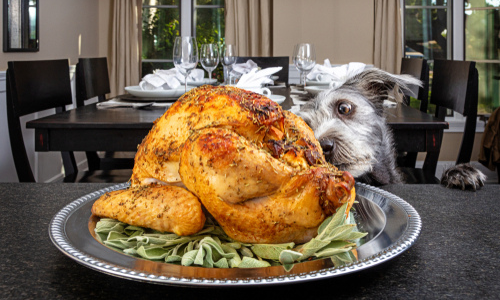
Don't turn your back on your raw turkey while you prepare Thanksgiving dinner. In just a few seconds, your dog or cat can jump up on the counter and take a bite or lick of the bird.
Eating or licking raw meat increases your pet's risk of developing salmonella or bacterial infections. Turkey skin, whether cooked or uncooked, can also sicken your pet. The American Veterinary Medical Association notes that eating fatty turkey skin can cause life-threatening pancreatitis.
Don't let your pet gnaw on turkey bones either. The bones can become stuck in your pet's throat and may splinter easily, causing painful cuts.
Other foods to avoid include:
- Chocolate
- Yeast
- Scallions
- Foods that contain the sweetener xylitol
- Raw eggs
Prepare a Sanctuary for Your Pet
Some pets love everyone, others become a little anxious or fearful around strangers or groups of people. If your pet doesn't like large, loud gatherings, it may be happier spending the day away from the Thanksgiving festivities.
Before the guests arrive, place food, water (and a litter box if you have a cat) in a quiet room and close the door. Stop by the room periodically to check on your pet.
Make Sure Your Dog or Cat Wears an Identification Tag
While you're busy saying goodbye to your guests, your pet may decide it's the perfect time to dash outside. An ID tag attached to your pet's collar will increase the likelihood that your dog or cat will be reunited with you if it becomes lost. The tag should include the pet's name, and your name, address, and telephone number.
ID tags are important even if your pet has been microchipped. Although veterinary offices and shelters usually have microchip scanners, your neighbors won't be able to locate or read the chips.
Take Out the Trash
Even a normally well-behaved pet may be unable to resist temptation when the trash can is unattended. After all, the trash can contains all of the Thanksgiving foods that are usually off-limits to your pet. Food isn't the thing you need to worry about in the trash. String used to truss the turkey can wrap around your pet's intestines if swallowed, requiring emergency surgery.
Use Restraints When Traveling
Unrestrained pets may be at risk for serious injuries if an accident happens when you're driving to Grandma's house. Loose pets may also interfere with your concentration and force you to take your eyes off the road. Restrain your pet with a harness attached to a seat belt, or secure your pet's carrier firmly in place with the seat belt. Exploding airbags can injure or be fatal for your pet. For safety's sake, place your pets in the back seat.
Don't let pets stick their heads out the windows. They may hit their heads on posts or other obstacles or experience eye injuries from airborne particles and debris.
Put Decorations Out of Reach
It's only natural for pets to be interested in the decorations that suddenly appear around Thanksgiving. Unfortunately, an inquisitive cat can knock over a lit candle, or a curious dog can eat non-edible parts of decorations quicker than you can say "leave it".
Place decorations in high places that aren't accessible to your pet, and remove centerpieces as soon as your meal is over.
Whether your dog eats something it shouldn't during the holidays or your cat or small animal needs a checkup, we're here to help you care for your pets. Call our office if you have a question or want to schedule an appointment.
Sources:
The Humane Society of the United States: Travel safely with your pet by car, airplane, ship or train
American Veterinary Medical Association: Thanksgiving Pet Safety