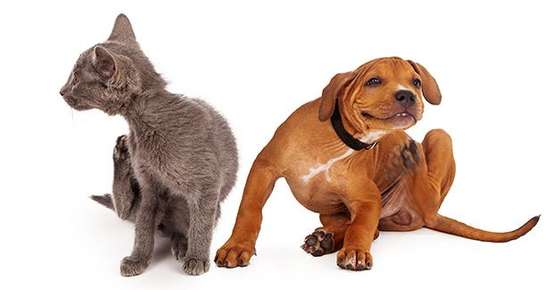
Food allergies occasionally occur in dogs and cats. They usually manifest themselves as itchy skin, ear infections, chronic vomiting, or diarrhea. If you suspect that your pet may have a food allergy, you can investigate by performing a food trial. There are three rules for a food trial:
1. Pick a new food that is different from any food fed in the past. This does not mean to just choose a different brand. You need to check the fine print on the ingredient list on each food label and pick a new food that is totally different in ingredients. Often the large label on the front of the bag mentions only two ingredients but in reality the food has many ingredients.
For animals fed many foods in the past, it may be difficult to find an appropriate food in the pet food store. There are new foods with "exotic" ingredients made for pets with allergies that are now available through veterinarians. For example, Venison and Potato, Rabbit and Potato, Duck and Potato, and Kangaroo and Oats are available for dogs. Duck and Green Pea, Rabbit and Green Pea, and Venison and Green Pea are available for cats. Preferably, the new food should have just one protein and one carbohydrate source.
2. You should feed the new food for 12 weeks to dogs and 8 weeks to cats before you decide whether it works or not.
3. You cannot feed another food, treats, table scraps, chewable vitamins or chewable Heartworm preventative. Dogs cannot have rawhide chew toys, pig's ears, cow hooves, etc. Heartworm prevention during this time can be provided by a non-chewable tablet or the topical liquid.
Once the trial period is over and if there was a positive response, you can determine the ingredient(s) that caused the allergy by adding, one at a time, the previously fed ingredients to the trial food for 14 days per ingredient. The pet should show an allergic response in this time period if that ingredient is an allergen.
Sugarless Gum Toxic to Dogs
Products safe for people are not necessarily safe for pets. For example, Xylitol is used as a sugar substitute in food products; it can be found in sugar-free candy, gum, and other products. In people, Xylitol has no effect on blood insulin or glucose levels, but in dogs, Xylitol causes a strong, rapid insulin release that causes the blood glucose to go decrease dramatically. This hypoglycemia causes the dog to be weak, wobbly, collapse, or even seizures. This effect can occur within 20-60 minutes of eating the gum or candy.
Another adverse effect of Xylitol is liver problems, even liver failure. This occurs hours to a couple of days after ingestion. This can occur without signs of earlier hypoglycemia. Liver problems can have symptoms of vomiting, diarrhea, jaundice, poor appetite, and blood clotting problems.
Small amounts of Xylitol can have these effects. Only one or two pieces of sugarless gum can be toxic to a twenty-pound dog. Recently, veterinarians discovered that some liquid human medicines are sweetened with Xylitol. If you get a prescription liquid medicine from a human pharmacy, be sure to confirm with the pharmacist that it doesn't contain Xylitol.
Obesity
Excess weight is a serious health problem for dogs and cats. In the U.S., nearly 50% of middle-aged pets are overweight. The two main causes of obesity are too much food and too little exercise. Other contributing factors can be due to hormonal influences, certain genetic factors, and other disease processes.
If you pet is carrying extra weight, it can:
1. Increase the risk of heart disease by forcing the heart to work harder.
2. Increase the risk of arthritis as extra weight can stress the joints, cause joint pain, and make it harder for your pet to move around comfortably.
3. Obesity can cause breathing problems, skin and hair coat problems.
4. Obesity frequently leads to diabetes, especially in cats.
All of these problems can make your pet uncomfortable and limit the way they interact with you and other family members.Treatment is to rule out and treat any medical causes, such as hypothyroidism. Reducing caloric intake and increasing exercise can help your pet successfully lose weight. Lifestyle changes and a weight loss program are essential. Your veterinarian can help determine if your pet is too heavy and provide guidelines for achieving their ideal weight. Slentrol is an oral weight loss drug for obese dogs that are not able to lose weight by other means.