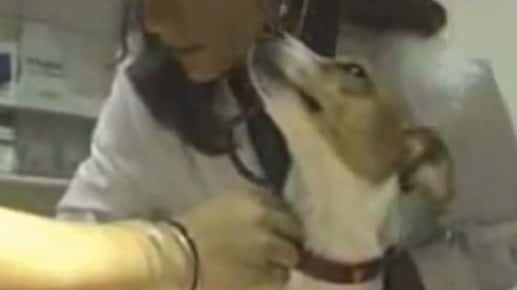
Although many of us dread it, we visit our dentist routinely to insure our mouth stays healthy and our smile bright. Our pets also benefit from a visit to their dentist and advanced dental care is quickly becoming more common. That's right…braces for Boxers, crowns for kitties and a root canal for a Rottweiler is just a typical day at the Veterinary Dentist!
When we go to the dentist, we are not surprised when the doctor tells us that we need to have dental x-rays done. But, hearing the same thing from your veterinarian might shock you. After all, how does the pet know to stand still?
Digital dental x-rays are becoming more common at veterinary practices across the country. Since a large percentage of our pets suffer from gingivitis or even more advanced periodontal disease, this tool is vital for veterinarians and veterinary dentists.
Most people don't realize it, but most of the pet's tooth lies under the gumline where you can't see any disease. Dr. Jan Bellows, a Diplomate in the American Veterinary Dental College explains, "Sixty percent of the tooth lies under the gum line. Since companion animals don't talk (to tell us where the pain is), x-rays help the veterinarian see what's below."
Dr. Brett Beckman, past President of the American Veterinary Dental Society concurs. "42% of cats and 28% of dogs have hidden dental problems that we would never find without x-rays." So, while you might think that your pet's teeth are just fine, the odds are that he or she is actually losing bone and other important structures that help hold the tooth in place. The best way to determine this is the use of x-rays, done while the pet is under a general anesthetic.
Beyond checking for disease, dental x-rays are also important when it comes to breed specific issues. Many toy breeds end up with crowded teeth or even adult teeth that never erupt above the gumline. Boxers, Bulldogs and other short faced breeds also suffer from conformation issues that misalign teeth.
Finally, dental issues can hinder, or even end the careers of working and show dogs. X-rays can help veterinary dentists find the fractured tooth of a working police dog or locate a tooth that has delayed erupting in a show dog.
Thankfully, your veterinary dentist is also equipped to help resolve many of these issues. Fractured teeth can be repaired with the use of crowns and root canals are often replacing extractions. As Dr. Kenneth Lee, a veterinary dentist in Colorado explains, "Dog's canine teeth extend well below the gumline and often are closely associated with the jaw bone. Extracting these teeth has the potential for causing serious damage to the jaws."
For conformation issues and hereditary problems, corrective oral surgery and even braces are now available. It's even possible to help offset the damage of severe dental disease.
Understanding the importance of your pet's dental health is a great first step for most pet owners. Your pet doesn't have to suffer from dental disease and you don't have to tolerate "doggy breath". Making a dental plan with your veterinarian will not only prevent dental disease, but may stop other health problems as well.
The first step is to have your veterinarian do a complete oral exam on your pet. Note any areas of excessive tartar build-up and any other concerns, such as fractured teeth, bleeding gums or ulcerations in the mouth.
Next, if appropriate, schedule a complete dental cleaning with your veterinarian. Done under a general anesthetic, cleaning will remove the tartar and plaque, reducing bacteria that cause serious illnesses, such as heart disease. Using digital x-rays allows the veterinarian to see under the gumline, a crucial step in preventing future dental problems.
After the cleaning, your veterinarian may apply a barrier sealant to help repel plaque-causing bacteria. This high tech - low cost - sealant gel is easy to continue at home and will help prevent further build up of plaque and tartar.
Home care is a vital part of maintaining your pet's dental health. From routine brushing to special water additives, chew toys and even a barrier sealant like OraVet, your veterinarian can help make caring for your pet's teeth easier. Some foods are even designed to help remove plaque build-up! The best news? These products not only remove plaque and freshen breath, they just might help your pet live a few years longer.